

Product Information
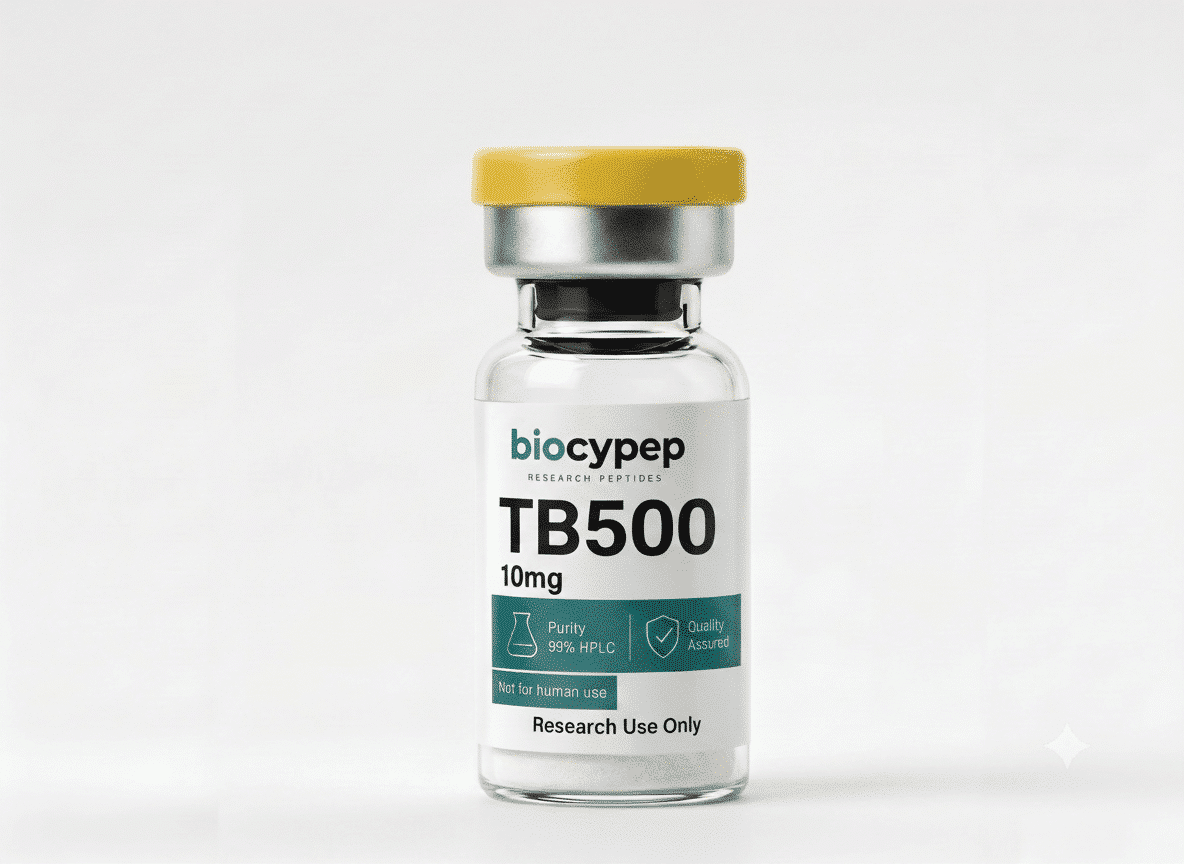
TB 500 is supplied as a lyophilized powder in a sealed vial. It is intended exclusively for laboratory and research purposes and is not intended for use in humans or animals.
Available testing documentation is organized by product in the laboratory section, keeping product information and testing status traceable.
Short Profile
- Thymosin β4 fragment
- Studied in research on actin regulation
- Lyophilized, ≥98% purity
Research Guide · What Is TB 500? Structure, Analysis, and Research Handling →
About TB 500
What Is TB 500?
TB 500 is the common name for a short synthetic fragment of thymosin β4. Thymosin β4 is a 43-amino-acid protein that binds monomeric actin (G-actin) in cells, thereby preventing it from being used to build actin filaments.
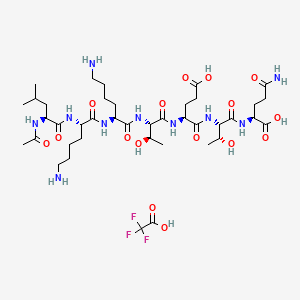
Analytical literature and substance databases define TB-500 as an N-terminally acetylated heptapeptide with the sequence Ac-LKKTETQ. It corresponds to positions 17–23 of the mature human protein. Common spellings include TB500 and TB 500; a more systematic name is N-acetyl-thymosin β4 (17–23).
Structure and Key Characteristics
- Sequence (literature definition): Ac-Leu-Lys-Lys-Thr-Glu-Thr-Gln-OH
- Chain length: 7 amino acids
- Termini: N-terminal acetyl group; free C-terminal carboxylic acid
- Sequence origin: Positions 17–23 of thymosin β4 (gene TMSB4X, UniProt P62328)
- Parent protein for comparison: Thymosin β4, 43 amino acids, approximately 4,963 g/mol, CAS 77591-33-4
The sequence contains two lysines, two threonines, one glutamate, and one glutamine, making it predominantly polar. The N-terminal leucine is the only residue with a nonpolar side chain. The acetyl group at the start of the chain is part of the fragment’s definition and distinguishes it from the unmodified sequence LKKTETQ.
Research Context
The LKKTETQ sequence is described in the literature as an actin-binding region of thymosin β4 and has been associated with cell migration. The fragment is therefore studied in in-vitro research on cell migration and actin-cytoskeleton dynamics, as well as in preclinical angiogenesis models. Another area of analytical research concerns LC-MS methods developed to detect the acetylated heptapeptide in biological samples.
Analytical Testing
Mass spectrometry is particularly important for TB 500 because the name is not used consistently. Some product descriptions on the market use it to refer to full-length thymosin β4. The two molecules differ in mass by more than a factor of five: approximately 0.9 kDa for the acetylated heptapeptide and approximately 5 kDa for the full-length protein. Mass spectrometry can therefore help identify which molecule is present in a vial, while HPLC indicates the proportion of the target compound in the overall sample.
TB 500 is regularly tested by an independent external laboratory using HPLC and mass spectrometry. Published certificates of analysis are available in the laboratory section.
Specifications
Relevant product details—including form, purity, testing method, and intended use—are provided on the product page.
For research use only. Not for human or veterinary use.