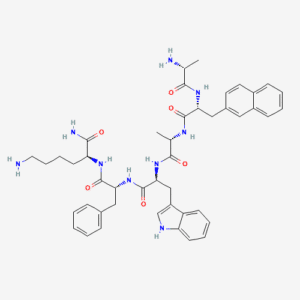
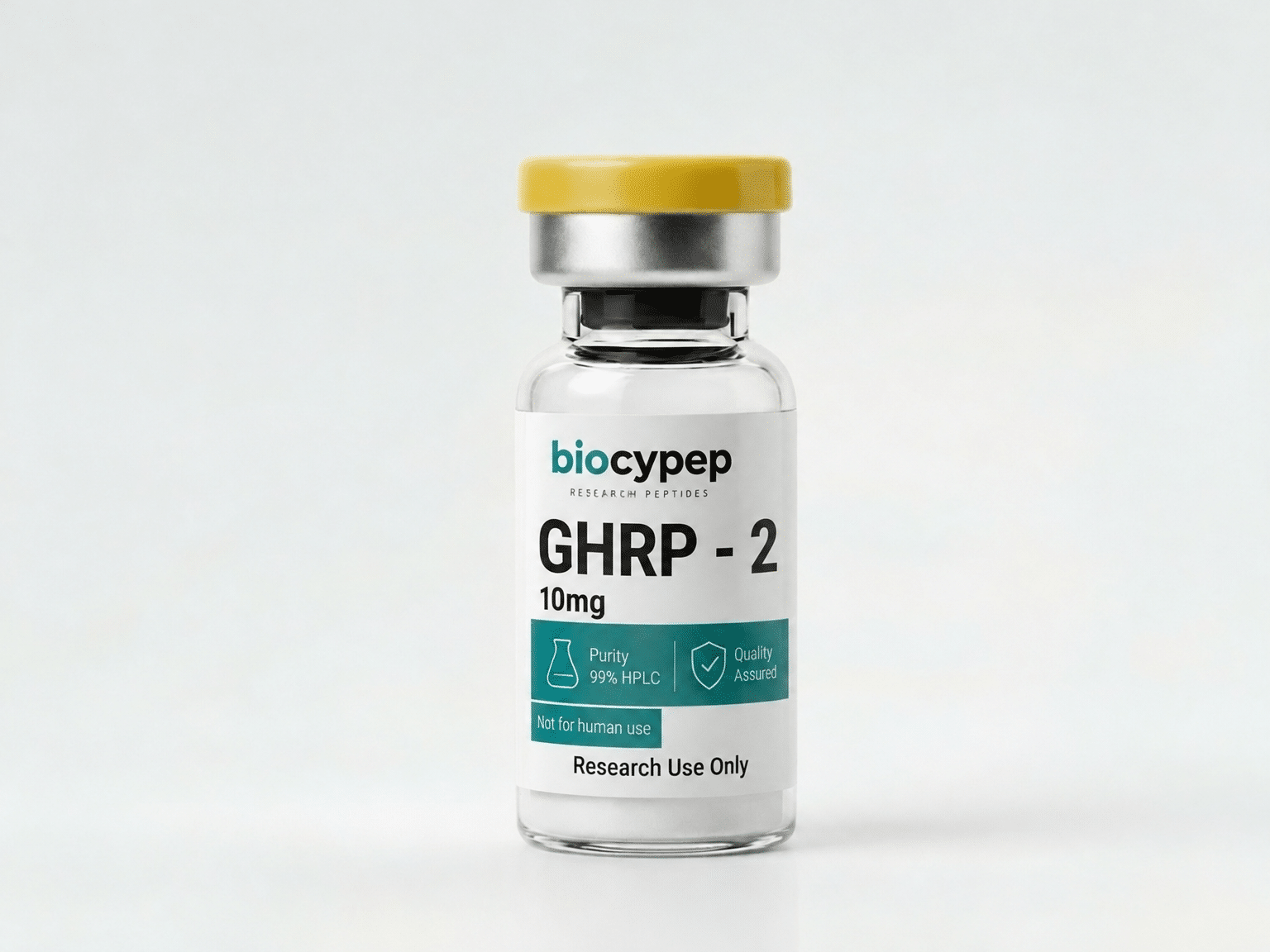
GHRP-2: Belongs to the first generation of synthetic growth hormone secretagogues: six amino acids that share no structural similarity with the stomach hormone ghrelin, but activate the same GHS-R1a receptor, thereby prompting the somatotropic cells of the pituitary gland to release GH in a pulsatile manner.
From research:
- In a direct comparison involving healthy adults, GHRP-2 and hexarelin triggered a comparably potent, dose-dependent GH response. Both outperformed GHRH. Prolactin, ACTH, and cortisol levels also increased slightly (1997).
- During a GHRP-2 infusion, seven healthy men consumed, on average, 35.9% more food than when administered a saline solution. The hunger-inducing effect of ghrelin can therefore be replicated with this peptide (2005).
- In 15 short-statured children, the growth rate increased from 3.7 cm to 6.1 cm per year after six months of intranasal administration, without any change in IGF-1 (1997).
- A 1998 review classifies the GHRP class as substances that act on both the hypothalamus and pituitary gland simultaneously, likely imitating a then-unknown natural hormone. Ghrelin was only discovered in 1999.
In animal models, GHRP-2 is among the most potent representatives of its family. Its half-life is approximately 15 to 60 minutes, meaning its effect is short-lived. Compared to the selective ipamorelin, its profile is broader: in addition to GH, cortisol and prolactin levels also show moderate changes, which is why many current study designs opt for ipamorelin, using GHRP-2 primarily for comparisons and studies of potency. The substance’s history dates back to the 1990s.
Intended Use
For research use only. All products are intended exclusively for scientific in-vitro research and are not intended for human or veterinary use.