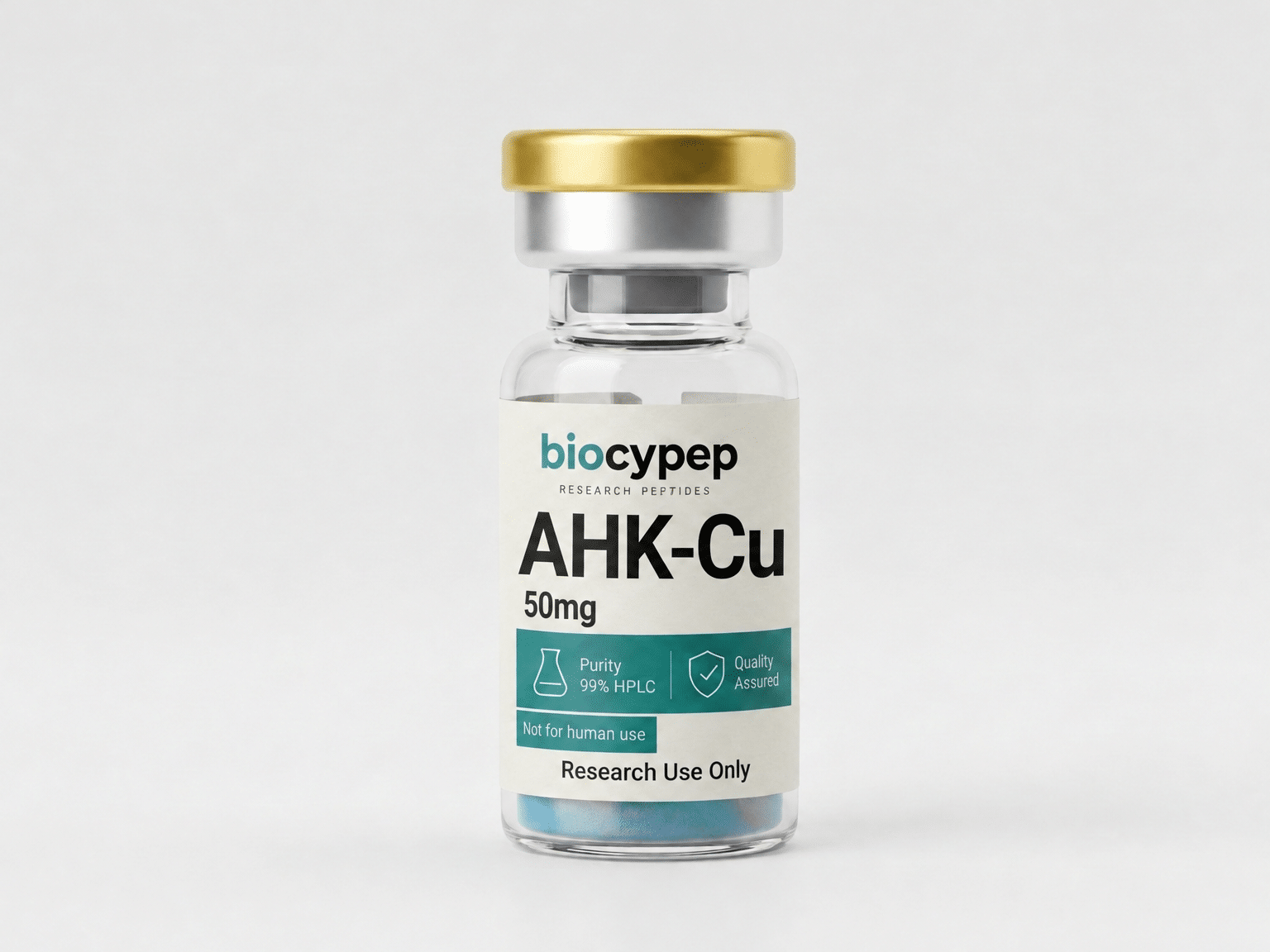
AHK-Cu
One amino acid distinguishes AHK-Cu from its well-known relative, GHK-Cu: alanine occupies the first position instead of glycine; the rest—histidine and lysine, along with the bound copper ion—is identical. Small as the difference is, preclinical studies suggest it shifts the compound’s activity profile.
The focus is on hair. Cell-culture studies associate AHK-Cu with two observations:
- The hair follicle’s growth phase (anagen) lasts longer.
- Dermal papilla cells, which support the follicle, are less likely to undergo programmed cell death.
The molecule shares some mechanisms with GHK-Cu, such as regulating metalloproteinases and influencing microcirculation. However, the available data also point to distinct effects on follicle biology.
Chemically, AHK-Cu behaves like other copper tripeptides: it appears bluish in solution. The copper is tightly bound, which keeps the compound stable under physiological conditions. However, as a small tripeptide, it is rapidly degraded and therefore has a short half-life. Research has focused mainly on topical use, as well as subcutaneous administration in preclinical models.
Intended Use
For research use only. All products are intended exclusively for scientific in-vitro research and are not intended for human or veterinary use.